By GrowsChat Team · July 13, 2026
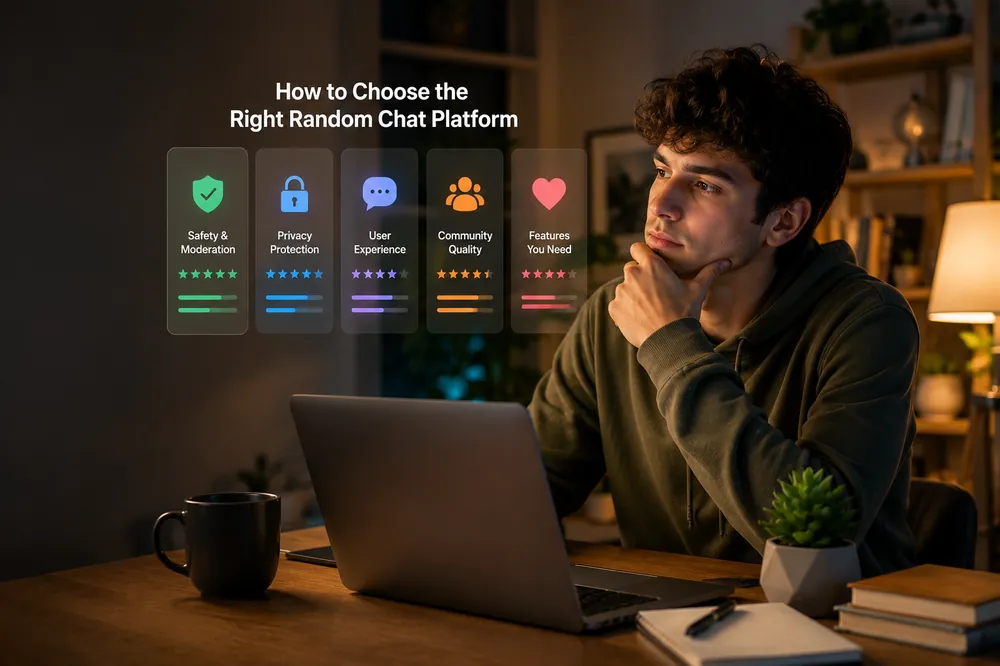
Random chat platforms all promise roughly the same thing on the surface: connect you with a new person, instantly, no profile setup required. But the experience of actually using one can differ enormously depending on decisions the platform made long before you ever clicked "start." Some of those decisions are obvious once you notice them. Others only become clear after something goes wrong.
Here's what actually separates a well-built platform from a rough one, and what's worth checking before you commit any real time to one.
It's tempting to evaluate a chat platform by its features first, filters, video quality, design, and treat safety as an afterthought. In practice, moderation quality is the single factor that determines whether the rest of the experience is even usable. A platform with a beautiful interface and no meaningful moderation will, sooner or later, become a place you don't want to spend time in, a pattern covered in more depth in how chat platforms should handle moderation.
A few concrete things worth checking:
None of this needs to be perfect, no platform catches everything, but the presence of a real reporting flow and a stated moderation approach is a meaningfully different signal than a platform that doesn't mention either. If you're trying to spot problem accounts specifically, how to spot fake profiles on random chat apps covers the warning signs worth watching for once you're actually in a conversation.
Not all random matching works the same way. Some platforms genuinely randomize who you're paired with. Others quietly weight matching toward premium users, or fill gaps with AI conversation partners without saying so clearly.
The second one is worth taking seriously as a dealbreaker. If a platform doesn't disclose when you might be talking to an AI rather than a real person, that's a trust issue, not a minor detail. Look for platforms that are upfront about this, whether they use AI fallback at all, and if so, whether it's clearly labeled when it happens. GrowsChat's approach is to never use hidden or undisclosed AI, if a real match isn't available, that's stated plainly rather than quietly substituted. A platform that's honest about its matching logic, even when the honest answer is "sometimes you'll get an AI if no one's available," is a better sign than one that stays vague about it.
A genuinely anonymous random chat experience shouldn't require much from you upfront. If a platform asks for a phone number, full name, or extensive profile information just to start a basic text chat, that's worth noticing, since it changes the actual privacy profile of the platform even if the marketing emphasizes anonymity, a distinction covered in more detail in how GrowsChat protects user privacy.
Worth checking specifically:
A platform that lets you try a real conversation before asking for any account details is generally a better sign of a product built around genuine anonymity rather than one built primarily around data collection. GrowsChat works this way, you can start a real conversation as a guest, no account or personal details required to try it.
This is the part most people care about most directly, and it's worth testing rather than just reading about. A few things to pay attention to during an actual session:
How long do you actually wait for a match? Wait time varies by time of day and platform size, but a platform that consistently leaves you waiting more than fifteen or twenty seconds without any fallback option is a sign of a smaller user base or weaker matching logic. How this actually works behind the scenes, queues, filters, and fallback timing, is covered in how random chat platforms match people behind the scenes.
Can you filter by language, interest, or chat type? Platforms differ a lot here. Some offer language matching but nothing else. Others let you filter by broad interests or chat type (text vs voice vs video) as a distinct upgrade path rather than a single option.
Is skipping to a new match instant, or does it re-queue you slowly? A platform where skipping feels sluggish tends to feel frustrating fast, since skipping a mismatched conversation is one of the most common actions on any of these platforms.
Most platforms in this space use some version of a freemium model, with a free tier that works but has limits, and a paid tier that removes ads, adds filters, or speeds up matching. This isn't inherently a bad model, running real-time matching and video infrastructure at scale costs real money, and a sustainable platform needs a real revenue plan behind it.
What's worth checking is whether the free tier is actually usable on its own, or whether it's been deliberately made frustrating specifically to pressure an upgrade. A platform where basic text chat, arguably the core feature, is heavily restricted on the free tier is a different value proposition than one where the free tier is genuinely functional and the paid tier adds convenience on top rather than removing artificial roadblocks.
If video or voice matters to you, it's worth paying attention to a few technical signals, even without a technical background. Does the call connect quickly, or is there a noticeable delay before video appears. Is audio quality clear, or does it stutter and drop. These aren't just polish details, they usually reflect real infrastructure choices behind the scenes, and platforms that get this right tend to have invested specifically in low latency, direct connections rather than routing every call through a slower central server.
A quick, informal way to test this: start a video chat and pay attention to how it feels in the first thirty seconds. A platform with solid infrastructure tends to connect fast and stay stable. One with weaker infrastructure tends to show its cracks early, in that same first half minute.
Beyond all the technical checks, it's worth simply paying attention to what a handful of real conversations feel like. Is the tone generally respectful. Do conversations feel like they're with real, present people, or does something feel off, scripted responses, oddly repetitive patterns, conversations that never quite land on anything specific, some of the same signals covered in how to spot fake profiles on random chat apps. This kind of read isn't scientific, but it's often accurate, and it's one of the fastest ways to sense whether a platform's community and moderation are actually working as intended, versus just claimed in the marketing copy.
What's the most important thing to check before using a random chat platform? Moderation and reporting tools matter more than almost anything else, since they determine whether the rest of the platform is actually usable long term, regardless of how good the other features are.
How do I know if a platform is using AI instead of real people? Look for a platform that's explicit about this in its own description or FAQ. A platform that clearly discloses when and how AI fallback is used is a stronger trust signal than one that stays vague or avoids the topic entirely.
Is it safe to use a random chat platform without creating an account? Many platforms offer a guest mode specifically for this reason. Being able to try a real conversation before handing over account details is generally a good sign that anonymity was a genuine design priority.
Should I be worried about data privacy on these platforms? It's worth reading the privacy policy, or at least skimming what data is collected and how long it's kept. Platforms that ask for minimal information to get started are generally a stronger fit for anyone prioritizing privacy.
Are paid tiers on random chat platforms worth it? It depends on whether the free tier is genuinely usable on its own. If it is, a paid tier is more about added convenience. If the free tier feels deliberately limited, that's worth factoring into how you evaluate the platform overall.
What should I do if a platform feels unsafe or low quality after trying it? Trust that read. A few uncomfortable or low-quality conversations in a row, especially combined with weak reporting tools, is a reasonable reason to move on to a different platform rather than assuming it will improve.
The features that get marketed loudest, matching speed, video quality, interface design, matter, but they're not actually the things that determine whether a random chat platform is good to spend time on. Moderation, honesty about AI use, and how little data it demands upfront say more about a platform's actual priorities than its landing page ever will. A few minutes of real testing, paying attention to wait times, call quality, and how conversations actually feel, will usually tell you more than any feature list. GrowsChat is built around exactly those priorities, real moderation tools, no hidden AI, and a guest mode that lets you judge the experience for yourself before committing to anything.