By GrowsChat Team · July 30, 2026
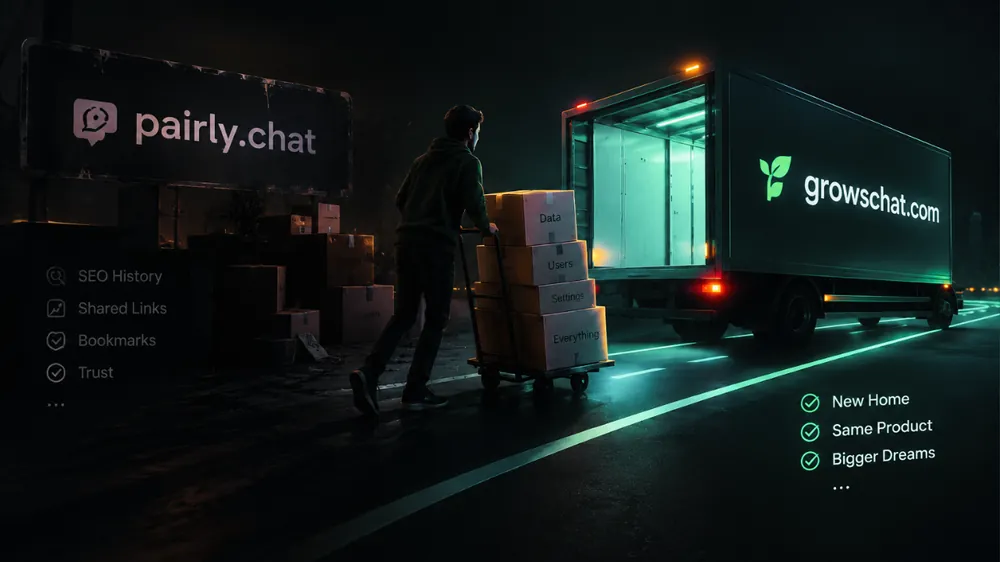
GrowsChat didn't start as a rebuild. The first version launched, found real users, and taught us more by failing than it ever would have by succeeding quietly. No rate limiting, no real plan for covering server costs, a product that looked polished but wasn't actually easy to walk into. It ran until it couldn't.
Rebuilding meant going back to first principles instead of patching what was already there. A few decisions came early, and we've stuck to every one of them since.
Random chat as a category has a trust problem. The platform that defined it for over a decade, Omegle, shut down in 2023 after years of safety issues it couldn't keep up with. What replaced it has been a mixed bag, some genuinely better, some just as loose with safety as before, some quietly using AI in ways users are never told about.
We didn't want to build another entry in that second category. We wanted to build the thing we'd actually trust ourselves.
AI would never pretend to be human. If you're ever matched with GrowsChat AI while we look for a real person, you'll know, every single time. No exceptions, no fine print, no quiet feature that gets adjusted later once growth pressure sets in. We wrote more about why this matters in why hidden AI bots are a problem.
No account should be required to have a genuine conversation. Sign-up walls exist to collect data and reduce friction for the platform, not for the user. GrowsChat starts as a guest experience by design. If you want to save chats or add friends later, an account is there, but it's never the price of entry.
Safety would be built in, not bolted on after something went wrong. Every video call includes automatic content screening. Reporting ends a conversation instantly, and reports are actually reviewed. This isn't a response to a crisis, it's the starting position. The full breakdown lives on our Safety page.
Being honest about tradeoffs matters here too. Disclosed AI is less "sticky" than pretending it's human, some users prefer not knowing. Guest access means less data to build growth strategies around. Real moderation costs more than a report button nobody reviews. None of these were free decisions. We made them anyway, because the alternative was building something we wouldn't personally want to use.
Still early. Still smaller than the established names in this space, covered honestly in our comparison of Omegle alternatives. Still building. But built around the idea that a random chat platform can be genuinely safe and genuinely honest without losing what makes it worth using in the first place, a real conversation with someone new.
Is GrowsChat a company or an independent project? GrowsChat is an independent project, not backed by a large company. That's part of why it can move quickly on decisions like disclosed AI without needing to justify them to a larger organization.
How does GrowsChat make money if the core experience is free? Through a free tier partially funded by ads, and optional paid plans for people who want extras like priority matching and filters. No selling user data, and no paywall on the basic ability to talk to someone.
Will GrowsChat's approach to disclosed AI ever change? No. It's not a feature under review, it's the foundational decision the current version of GrowsChat was built around.
Is this the same team or product as the original GrowsChat? Same name, same underlying goal, but a full rebuild. The approach, disclosed AI, guest access, safety-first design, is new.
Curious what a chat platform built around those decisions actually feels like? Try GrowsChat, free, no sign-up required.